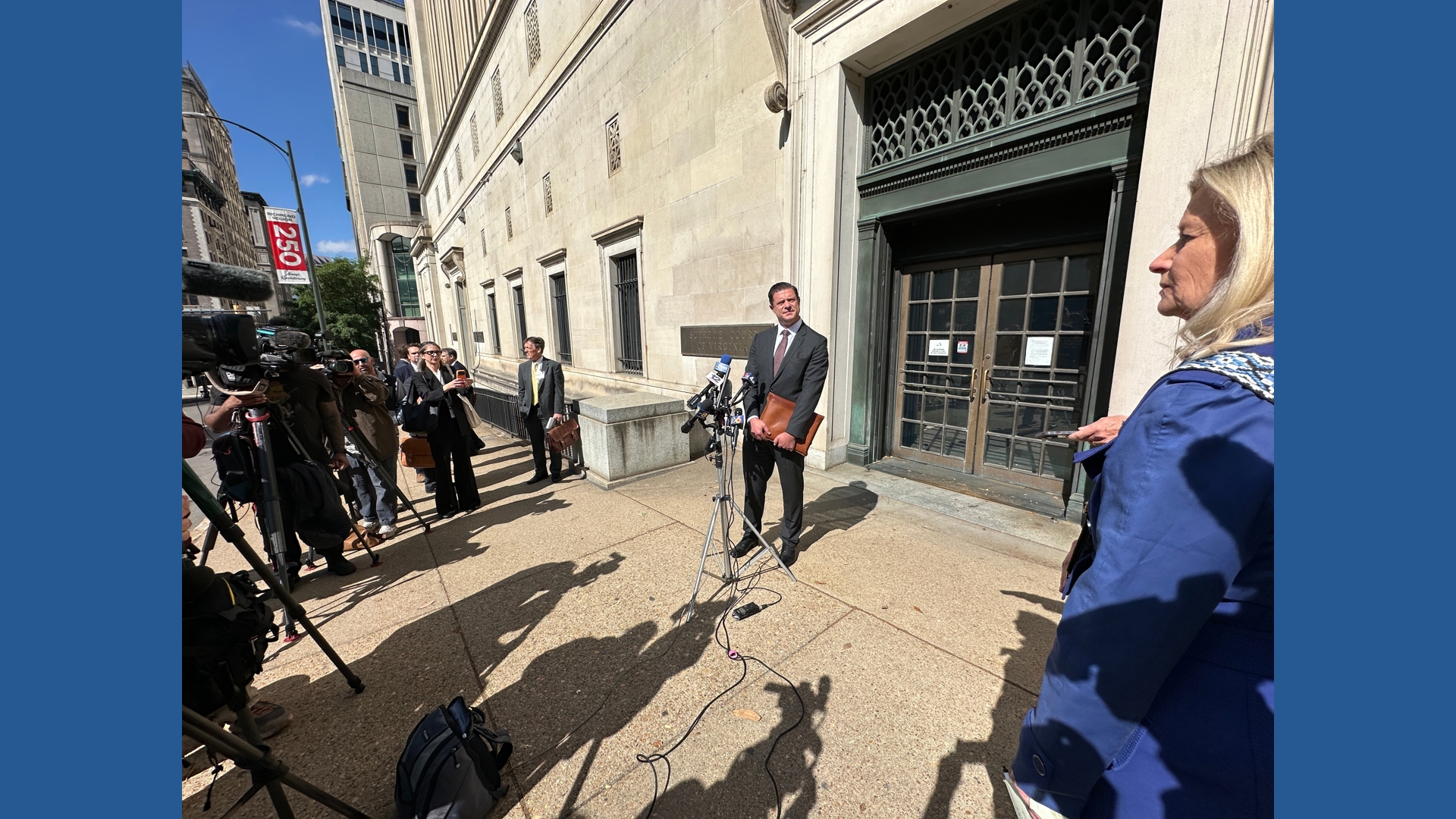
The Virginia Supreme Court is at the center of a constitutional showdown over a voter-approved congressional redistricting plan that appears to benefit Democratic candidates. At stake is not just the balance of political power in the state’s US House delegation, but the legitimacy of a citizen-led redistricting process designed to end partisan manipulation. The court’s decision could set a precedent for how independent commissions interact with judicial oversight—and whether voter-endorsed maps can be overturned on technical or constitutional grounds.
This isn’t just another partisan battle disguised as legal procedure. It’s a test of democratic accountability, constitutional boundaries, and whether a map shaped by citizens can survive challenges rooted in legal interpretation rather than public will.
The Origins of the Disputed Map
The current controversy traces back to Virginia’s 2020 ballot referendum, where voters overwhelmingly approved a constitutional amendment creating an independent redistricting commission. The goal was clear: end decades of partisan gerrymandering by taking map-drawing power away from the legislature and handing it to a bipartisan citizen panel.
But the process hit turbulence. The Virginia Redistricting Commission, evenly split between Democrats and Republicans, failed to agree on new congressional boundaries. As stipulated in the amendment, the task then fell to the Virginia Supreme Court, which in 2021 appointed a special master—retired judge John Charles Thomas—to draw the maps.
Thomas produced a map that, while praised for its compactness and adherence to communities of interest, resulted in a 7-3 Democratic advantage in the state’s 11 US House seats. Republicans argued the map diluted their statewide support, especially in central and southern Virginia. Despite these objections, the map was implemented and used in the 2022 and 2024 elections—both of which saw Democrats outperform expectations in Virginia.
Now, a new legal challenge argues that the court overstepped its constitutional role in 2021 and that the current map violates the state constitution’s requirement for districts to be “composed of contiguous and compact territory” and to preserve political subdivisions where possible.
Why the Court Is Revisiting the Map Now
The case currently before the Virginia Supreme Court—Herring v. Virginia Redistricting Commission—was filed by Republican lawmakers and conservative advocacy groups. They claim the court’s 2021 delegation of mapmaking to a special master exceeded its authority under the state constitution.
At the heart of the argument is a narrow but consequential legal question: When the citizen commission deadlocked, did the constitution empower the Supreme Court to appoint an outsider to draw the map—or was the court required to draw it themselves or send the process back to the legislature?
Legal scholars are divided. Some, like University of Richmond constitutional law professor Kimberly Robinson, argue the court acted as a “backstop,” fulfilling its duty when the commission failed. Others, including George Mason University’s Ilya Somin, contend that delegating to a third party without clear constitutional authorization undermines separation of powers.
“We’re not just debating lines on a map,” said Robinson in a recent lecture. “We’re debating who gets to make those lines when the people’s chosen mechanism fails. That’s a foundational democratic question.”
How the Map Favors Democrats—And Why It Matters
While Virginia is a purple state—voting for Joe Biden in 2020 but electing a Republican governor in 2021—the current congressional delegation is 7 Democrats to 4 Republicans. The map is considered one of the most Democratic-leaning in the state’s recent history.
This advantage stems from how the boundaries group urban and suburban voters. For example:
- District 8, anchored in Arlington and Alexandria, is a deep-blue stronghold.
- District 11, covering Fairfax County, leans heavily Democratic.
- District 3, centered in Norfolk and parts of Hampton Roads, includes minority-majority areas that reliably vote Democratic.
- District 5, stretching from Richmond through rural southern Virginia, was redrawn to be more competitive but still elected a Republican in 2024.
The map’s design clusters Democratic voters efficiently in urban centers while spreading Republican voters across larger, more rural districts. This doesn’t constitute traditional gerrymandering—packing and cracking—but reflects a geographic reality: Democrats dominate densely populated areas, while Republicans have broader but thinner support across the countryside.
Still, the outcome is clear: Democrats can win a supermajority of seats without winning a majority of the statewide vote. In 2024, Democratic House candidates won 54% of the statewide vote but captured 64% of the seats.
Legal Precedent and the Risk of Judicial Overreach
One of the most contentious aspects of the current challenge is the concern over judicial overreach. If the court invalidates a map it previously approved and used in two federal elections, it risks undermining public trust in both the judiciary and the redistricting process.
Courts are typically reluctant to intervene in political processes after the fact—especially when elections have already been conducted under a given map. The principle of laches (unreasonable delay in filing a claim) may weigh against the plaintiffs, who waited years to challenge a map they knew about and contested in 2021.
Moreover, overturning the map now could trigger a constitutional crisis. The 2025 legislative session is already underway, and there’s no clear mechanism to redraw boundaries this close to the 2026 election cycle. If the court blocks the current map, Virginia could face legal chaos, delayed primaries, or even court-appointed interim boundaries—again.
Legal experts warn against retroactive invalidation. “Once a map is used in a federal election, the presumption should be stability,” said Rebecca Green, co-director of the Campaign Legal Center’s Democracy Program. “Reopening that door sets a dangerous precedent—every losing party could sue after an election they didn’t like.”
Practical Consequences for Voters and Candidates For Virginia voters, the uncertainty is more than academic. Candidates are already fundraising, polling, and planning campaigns based on current district lines. A last-minute change could upend primary filings, shift campaign strategies, and confuse voters.
Consider District 7, a swing district stretching from the western suburbs of Richmond to Culpeper. Incumbent Republican Rep. Derrick Anderson is running for re-election, but under a redrawn map, he might find himself in a district with a different electorate—or pitted against a fellow Republican in a primary.
Local parties have already invested in voter outreach tailored to current boundaries. Changing the map now would waste resources and disrupt grassroots organizing.
There’s also a broader democratic cost: public confusion. When maps change after elections, it feeds narratives of corruption and manipulation—exactly what the 2020 redistricting reform was meant to prevent.
What Happens If the Court Blocks the Map?
If the Virginia Supreme Court rules in favor of the plaintiffs and blocks the current map, several scenarios could unfold:

- Return to the Commission: The court could send the process back to the redistricting commission, but with the same partisan split, deadlock is likely.
- New Special Master: The court could appoint a new mapmaker, but this repeats the same legal vulnerability.
- Legislative Takeover: The General Assembly could step in, but with divided government (Democrat-controlled Senate, Republican House), agreement is uncertain.
- Interim Map by Court: The justices could draft an emergency map, but this invites accusations of judicial partisanship.
None of these options are clean. Each carries risks of delay, legal appeals, or political backlash.
And if the court allows the map to stand, Republicans may push for legislative changes to limit judicial power in redistricting—potentially unraveling the citizen commission model altogether.
Past Precedents in Virginia Redistricting
Virginia has a long history of redistricting battles. In the 1990s, the US Supreme Court struck down a congressional map for racial gerrymandering in Shaw v. Reno, ruling that District 12—a narrow, serpentine district stretching along I-85—violated the Equal Protection Clause.
More recently, in 2015, a federal court ordered Virginia to redraw its state legislative maps after finding that 12 districts relied too heavily on race in their design.
But those cases involved clear constitutional violations. The current challenge is different—it’s not about race or discrimination, but about process and authority. That makes it harder to resolve cleanly.
The Bigger Picture: National Implications
Virginia’s redistricting struggle is a microcosm of a national dilemma. As more states adopt independent commissions—from California to Michigan—the question of what happens when those commissions fail becomes urgent.
Who steps in? Legislatures? Courts? Appointed experts?
If Virginia’s Supreme Court invalidates a map drawn under its own authority, it could discourage other courts from playing an active role in redistricting—potentially leaving states in limbo when commissions deadlock.
Conversely, if the court upholds the map, it may affirm that courts can delegate technical redistricting tasks to neutral experts, preserving the integrity of citizen-led reform.
Final Thoughts: Stability Over Politics
The Virginia Supreme Court faces a choice: prioritize procedural purity or democratic stability.
The current map, while favoring Democrats, was drawn by a respected jurist, approved through a constitutional process, and used in two federal elections. Overturning it now would not correct a constitutional flaw—it would create one.
Reform was supposed to end the cycle of partisan map manipulation. Letting a legal technicality unravel a voter-backed process risks doing the opposite.
The court should let the map stand. Not because it’s perfect—but because it was made in good faith, under the rules in place, and with the public interest in mind.
For Virginia’s voters, candidates, and future reformers, continuity is not weakness. It’s the point.
FAQ
Why is the Virginia Supreme Court reconsidering a map from 2021? The court is reviewing a legal challenge claiming it overstepped its constitutional authority by appointing a special master to draw the map after the citizen commission deadlocked.
Does the current map violate the Virginia Constitution? Critics argue it fails contiguity and compactness standards, but lower courts and experts have found it legally sound. The core dispute is about process, not map design.
Who benefits from the current congressional map? Democrats hold a 7-4 advantage in Virginia’s US House delegation, reflecting strong urban and suburban support, though Republicans win statewide offices.
Can the map be changed before the 2026 elections? It’s possible but unlikely without significant legal and logistical hurdles, including delayed primaries and candidate disarray.
What happens if the court blocks the map? Virginia could face redistricting chaos, with no clear path forward—either returning to the deadlocked commission or relying again on court-appointed mapmakers.
Was the redistricting commission truly independent? The commission included legislators and citizens, but partisan balance led to deadlock. True independence was compromised by structural design.
How does this affect national politics? Virginia’s 11 House seats are competitive. A map change could shift the balance in a closely divided US House, affecting national legislative outcomes.
FAQ
What should you look for in Virginia Supreme Court Weighs Fate of Democratic-Favored House Map? Focus on relevance, practical value, and how well the solution matches real user intent.
Is Virginia Supreme Court Weighs Fate of Democratic-Favored House Map suitable for beginners? That depends on the workflow, but a clear step-by-step approach usually makes it easier to start.
How do you compare options around Virginia Supreme Court Weighs Fate of Democratic-Favored House Map? Compare features, trust signals, limitations, pricing, and ease of implementation.
What mistakes should you avoid? Avoid generic choices, weak validation, and decisions based only on marketing claims.
What is the next best step? Shortlist the most relevant options, validate them quickly, and refine from real-world results.