Equipment failure isn’t always the biggest danger in industrial settings. More often, it’s what happens after a machine stops—during maintenance or repair—that risks life and limb. Unexpected restarts, residual energy discharge, or miscommunication between technicians can lead to catastrophic injuries. That’s where lockout tagout lock sets come in. They’re not just accessories—they’re engineered layers of protection that form the backbone of any serious energy control program.
A lockout tagout (LOTO) lock set is a coordinated system of physical locks, tags, hasps, and devices designed to isolate energy sources and prevent unauthorized operation. Used correctly, these kits translate safety policy into action—ensuring machines stay de-energized until maintenance is complete and every worker is clear.
Below, we break down why lockout tagout lock sets matter, how to choose the right ones, and how to avoid common pitfalls that undermine their effectiveness.
Why Lockout Tagout Lock Sets Are Non-Negotiable
The core idea behind LOTO is simple: if a machine isn’t supposed to run, it can’t run. But simplicity doesn’t mean it’s foolproof. Human error, inconsistent procedures, or poor-quality equipment can all compromise the system.
OSHA standard 29 CFR 1910.147 mandates that employers implement a lockout tagout program to control hazardous energy. Non-compliance isn’t just risky—it’s expensive. Violations regularly top the list of OSHA citations, with penalties exceeding $15,000 per violation in serious cases.
Lockout lock sets make compliance actionable. They provide standardized tools that every authorized employee can use to:
- Isolate electrical, hydraulic, pneumatic, mechanical, or chemical energy sources
- Visually communicate that equipment is under maintenance
- Assign individual accountability via personal locks
- Prevent accidental or unauthorized re-energization
Without these tools, even the best-written safety procedures fail at the point of execution.
Consider a real-world example: a maintenance technician servicing a conveyor system. If a co-worker resets a breaker, thinking the work is done, the conveyor could restart mid-repair. A single lock from a LOTO set on the circuit breaker—paired with a tag explaining the work in progress—prevents that scenario.
Components of a Complete Lockout Tagout Lock Set
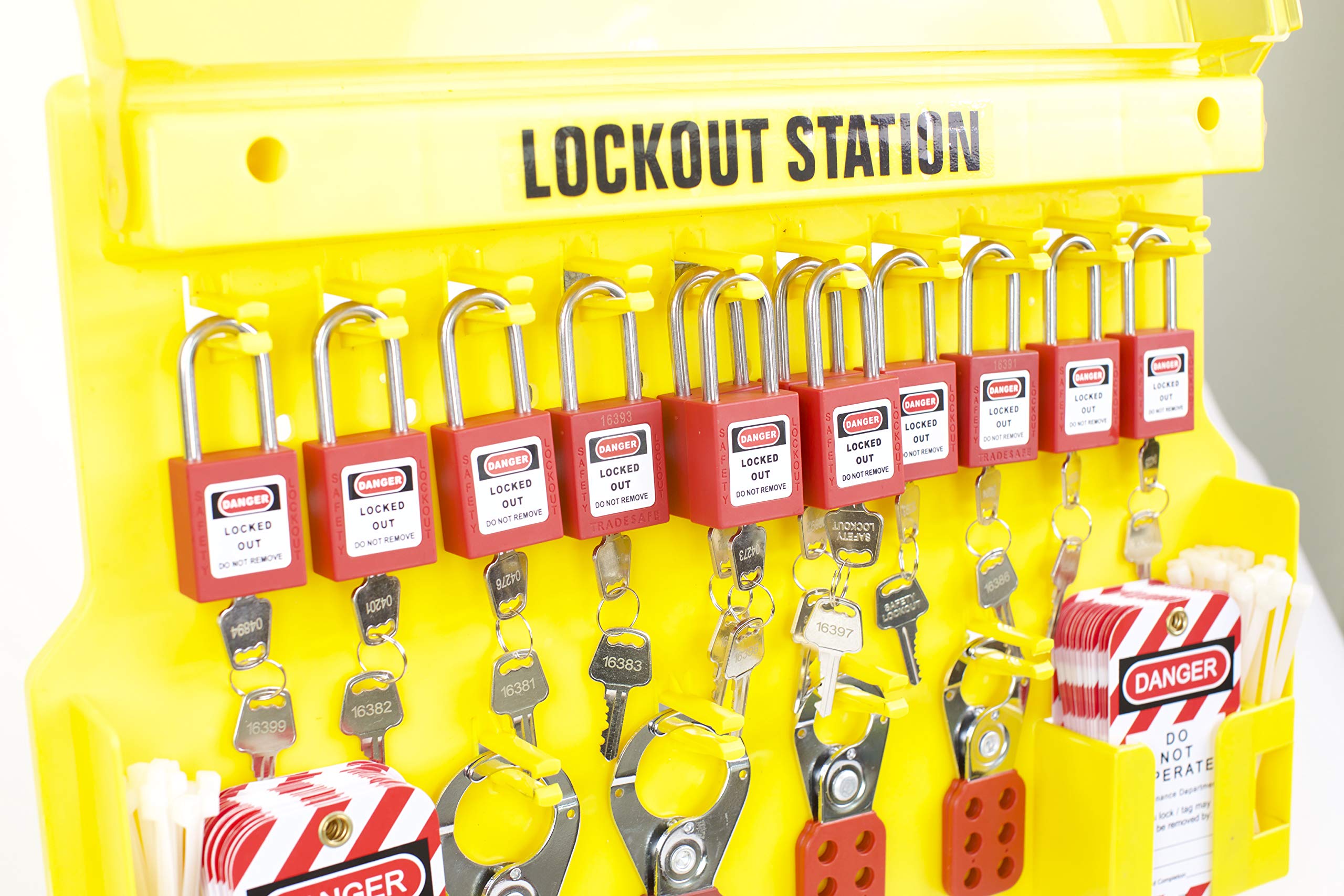
A LOTO lock set isn’t just a padlock. It’s a system. High-performing kits include multiple components tailored to various energy sources and workplace configurations.
#### Core Elements of a Standard LOTO Lock Set:

- Safety Padlocks – Durable, non-conductive locks (often in bright colors) that only the authorized employee can unlock. Many are keyed alike or keyed different, depending on use case.
- Lockout Hasps – Allow multiple workers to apply their individual locks to a single energy isolation point. Critical for group lockout scenarios.
- Valve Lockouts – Fit over shut-off valves for gas, steam, or hydraulic lines, preventing accidental opening.
- Circuit Breaker Lockouts – Secure breakers in the OFF position, often with adjustable arms to fit different panel sizes.
- Plug Lockouts – Cover electrical plugs to prevent reconnection of portable equipment.
- Tags – Red or orange warning labels with space for name, date, reason, and department. Must be tamper-resistant and legible.
- Storage Case – Keeps all components organized and portable, reducing the chance of missing tools during critical moments.
A well-designed set ensures all these pieces work together seamlessly. For instance, a technician servicing a pump might use a valve lockout on the supply line, a breaker lockout on the power source, and a hasp to allow a second technician to join—each applying their own lock.
Common Mistakes That Undermine LOTO Effectiveness
Even with high-quality lock sets, failure often comes down to misuse. These mistakes are more common than organizations admit:
1. Using Personal Locks for Non-LOTO Tasks When workers use their LOTO padlocks for lockers or tools, the risk of leaving them unattended increases. A lost or misused lock breaks the chain of control.
Solution: Provide separate utility locks. Treat LOTO locks as sacred—only for energy control.
2. Incomplete Energy Isolation Machines often have multiple energy sources. A technician might lock the electrical supply but forget the hydraulic accumulator still under pressure.
Solution: Conduct energy source audits. Use checklists specific to each machine.
3. Tagging Without Locking (Tag-Only Systems) Tags alone don’t physically prevent activation. OSHA allows tag-only use only in rare cases where locks aren’t feasible—and even then, extra safeguards are required.
Solution: Default to lock-and-tag. Use tags as supplements, not substitutes.
4. Poor Lock Set Accessibility If lockout kits are stored off-site or locked in a supervisor’s office, technicians may skip steps to meet downtime targets.
Solution: Deploy decentralized lock stations near high-risk equipment.
5. Failure to Train Authorized vs. Affected Employees Authorized employees apply locks. Affected employees (e.g., operators) must understand they cannot bypass them. Confusing the two roles leads to violations.
Solution: Run role-specific training with hands-on drills using actual lock sets.
Choosing the Right Lockout Tagout Lock Set for Your Facility
Not all lock sets are created equal. The right choice depends on your equipment, workforce size, and environment.
#### Key Selection Criteria:

- Material Durability – In wet, oily, or corrosive environments, opt for nylon or brass-bodied locks instead of steel.
- Lock Quantity – Small teams might need 5–10 locks; larger operations require group kits with 20+ locks.
- Compatibility – Ensure lockout devices fit your machinery. Test circuit breaker lockouts on actual panels before bulk purchase.
- Color-Coding – Use different lock colors for departments (e.g., red for maintenance, blue for contractors) to instantly identify responsibility.
- Standardization – Stick to one brand or system across the site to avoid incompatibility issues.
A manufacturing plant with multiple production lines, for example, might use master group lockout kits stationed near each line, each containing breakers, valves, and hasps specific to that area’s machines. Meanwhile, a small auto shop might use compact multi-purpose kits for battery disconnects and hydraulic lifts.
Top 5 Lockout Tagout Lock Sets for Industrial Use
Here are five reliable, field-tested LOTO lock sets widely used across industries:
| Product Name | Key Features | Best For |
|---|---|---|
| Master Lock 14/16-Piece LOTO Kit | 6 safety padlocks, hasp, breaker lockouts, valve caps, tags, durable case | General manufacturing, small teams |
| Grace Industries 2000 Series Group Kit | 20 locks, 2 hasps, electrical and valve lockouts, customizable tags | Large teams, multi-technician environments |
| Bolt Lockout Kit 15-Piece | Focus on hydraulic/pneumatic systems, high-visibility tags | Automotive, heavy machinery |
| Seton LOTO Starter Kit | Budget-friendly, includes training tags and checklist templates | Entry-level, small businesses |
| RS Pro Industrial LOTO Set | Chemical-resistant materials, IP-rated storage | Harsh environments (chemical, marine) |
Each of these balances completeness, durability, and real-world usability. The best choice depends on your operational scale and risk profile.
Integrating Lockout Lock Sets Into Your Safety Workflow
A lock set is only as good as the procedure behind it. To maximize effectiveness:
- Map All Energy Sources – For each machine, document electrical, mechanical, thermal, and chemical inputs.
- Develop Machine-Specific LOTO Procedures – Include step-by-step shutdown, isolation, and verification actions.
- Conduct Periodic Audits – OSHA requires annual inspections. Use them to test lock set availability and employee knowledge.
- Assign Lock Accountability – Each authorized employee should have their own lock, key, and tag. Never use master or shared keys.
- Simulate Scenarios – Run drills where a technician must isolate a press or robotic arm using only the lock set and checklist.
One aerospace facility reduced LOTO-related near-misses by 70% simply by adding visual workflow cards next to each lock station—showing exactly which devices to use on nearby equipment.
Final Thoughts: Safety Starts
with the Right Lock
Lockout tagout lock sets are more than compliance tools—they’re daily safeguards that protect lives. The right set, paired with disciplined procedures, turns abstract safety policies into tangible actions.
Don’t wait for an incident to audit your LOTO program. Review your current lock sets: Are they complete? Accessible? Properly maintained? Are employees trained—not just on what to do, but why each step matters?
Upgrade outdated kits. Replace missing components. Reinforce training with real equipment. Because when a machine powers up unexpectedly, it won’t matter what’s written in the manual—only what’s on the lock.
FAQ
What should you look for in Lockout Tagout Lock Sets: Your Key to Safer Workplaces? Focus on relevance, practical value, and how well the solution matches real user intent.
Is Lockout Tagout Lock Sets: Your Key to Safer Workplaces suitable for beginners? That depends on the workflow, but a clear step-by-step approach usually makes it easier to start.
How do you compare options around Lockout Tagout Lock Sets: Your Key to Safer Workplaces? Compare features, trust signals, limitations, pricing, and ease of implementation.
What mistakes should you avoid? Avoid generic choices, weak validation, and decisions based only on marketing claims.
What is the next best step? Shortlist the most relevant options, validate them quickly, and refine from real-world results.